For parents of kids with big emotions
Meltdowns are
communication.
Know what to do next.
When your child is spiraling, you do not need more theory. You need a clear answer, a phrase you can use right now, and a plan that fits your family.
Explore 1:1 parent coachingBuilt by a Nationally Certified School Psychologist.
Practical. Psychology-informed. No judgment.
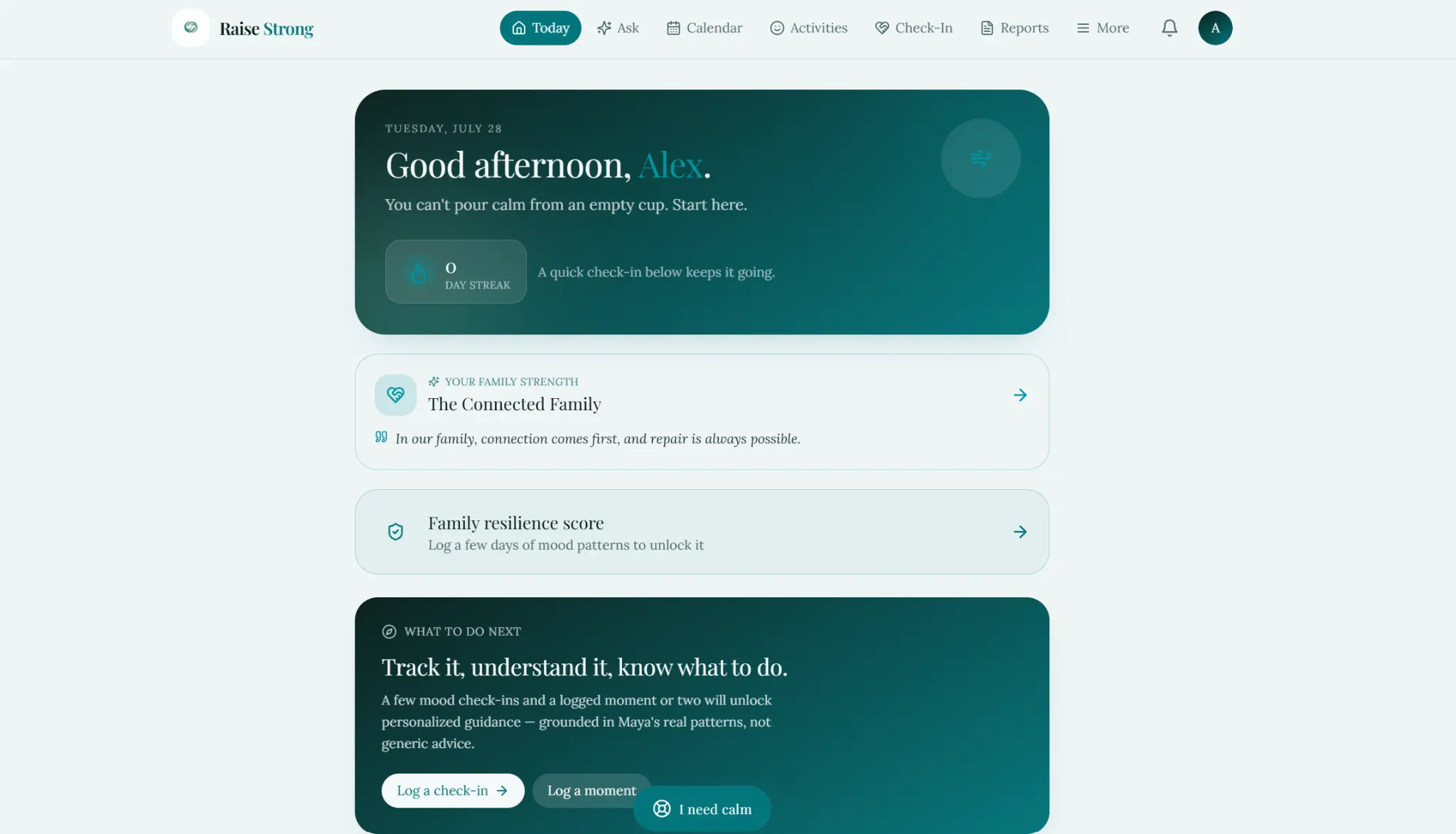
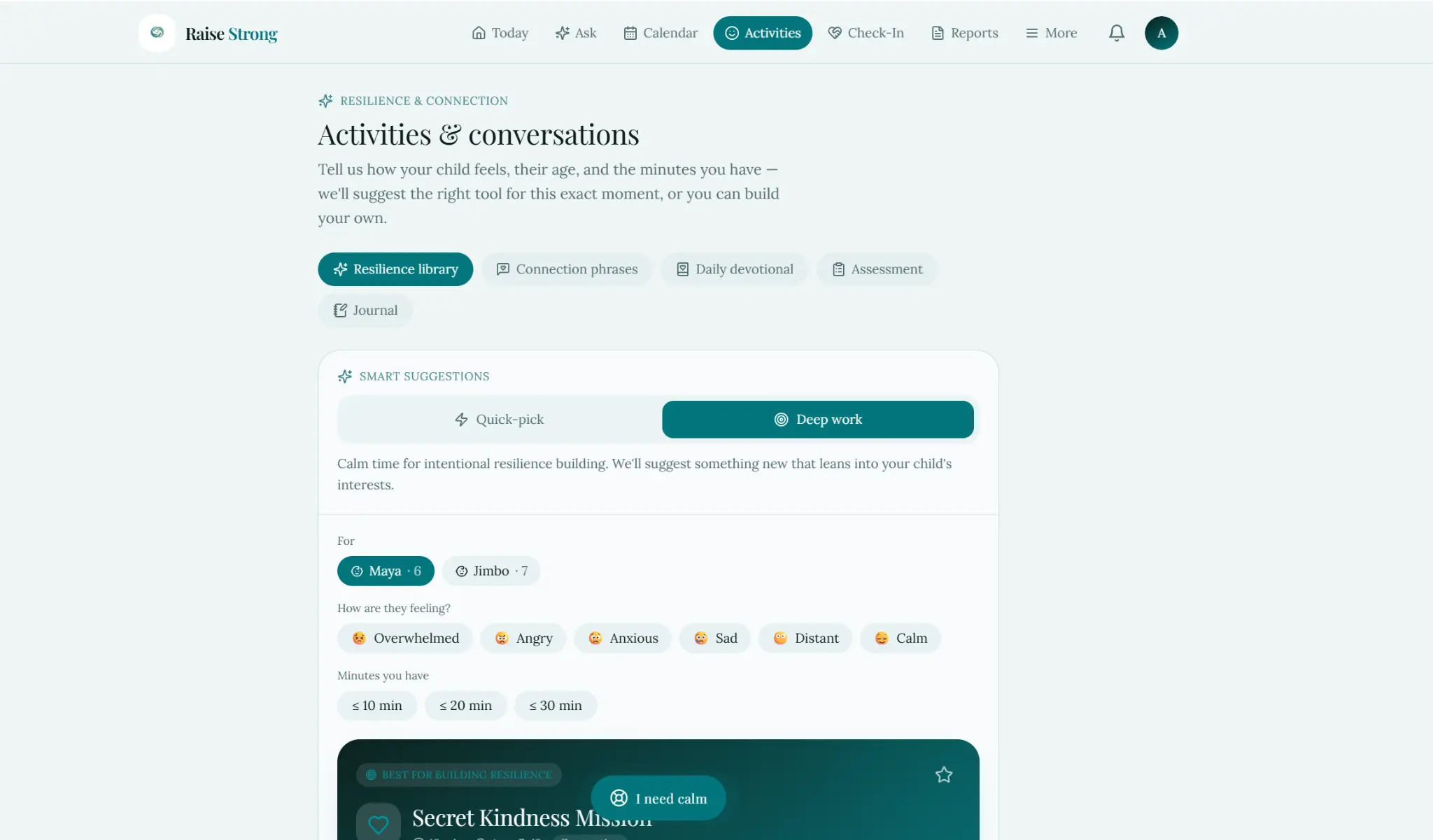
Tools matched to your child, mood, and time.
Help for the moment you’re in
What can I say right now?
Pick what’s happening. Get one thing to say and one thing to do. No email needed.
My child is melting down
Say this
“You are having a hard time. I am here.”
Next: If everyone is safe, pause and give your child time before you explain the limit.
Read more meltdown scriptsThey won’t turn off the screen
Say this
“I hear that you want more time. The screen is still going off.”
Next: Follow through on the screen limit without restarting the debate.
Read the screen-time exampleMy kids are fighting
Say this
“You are too upset to solve it safely. Take space, and we will come back.”
Next: Give each child some space to settle before hearing them one at a time.
Read more sibling-conflict scriptsOptional: Get the free PDF by email, plus follow-up parenting emails and offers from Raise Strong.
Start with what feels hard
What is happening in your home right now?
Choose the moment that feels closest. Start with one useful next step instead of trying to solve everything at once.
Big emotions take over and nothing you say seems to land.
Read the meltdown guide Power strugglesEvery limit turns into arguing, refusing, or escalation.
Respond without the battle Sibling conflictYou are exhausted from refereeing the same fights all day.
Learn when to step in Your own calmYou know what to do, but cannot access it when things spike.
Get personal support
Meet the founder
Alex Anderson-Kahl Ed.S., NCSP
Nationally Certified School Psychologist and parent coach with 10+ years helping families.
Interviews and expert commentary
In the media
-

TIME
The 5-Minute Habit That Can Bring You Closer to Your Kid
What can you learn when you let your child teach you something?
-

Brighterly
Brain Breaks for Kids
How long should a brain break last?
-

Authority Magazine
Raising Children Who Are Mentally and Emotionally Healthy
An interview about supporting children’s emotional health at home.
Your calm parenting command center
Support that knows your family, right when you need it.
Raise Strong helps you regulate first, choose language that fits the moment, and notice the patterns shaping your home.
Reset in ten seconds before you respond.
Get smart suggestions based on mood, age, and time.
Track patterns so hard moments stop feeling random.

A calmer next conversation
Know what to say when emotions get big.
Get seven simple phrases by email that help you acknowledge big feelings, hold a limit, and get through the moment without a longer argument.
- Use connection before correction
- Hold boundaries without adding shame
- Give your child language for what is happening
Enter your first name and email for the free PDF. You’ll also get follow-up parenting emails and offers from Raise Strong.

What support can make possible
More connection in the moments that used to feel impossible.
The goal is not perfect parenting. It is having a clear way to respond, repair, and move forward together.
1:1 Parent Coaching with Alex
Your family is not generic. Your support should not be either.
If you are tired of piecing together advice, parent coaching gives you private, practical support focused on your family’s real patterns and hardest moments.
Understand the patternSee what may be driving meltdowns, resistance, or disconnection.
Build a usable planLeave with clear language and next steps that fit real life.
Feel supported, not judgedTalk honestly about what is hard and find a calmer way forward.


Meet Alex Anderson-Kahl
Child psychology, translated for your kitchen table.
I’m a school psychologist, parent coach, and the founder of Raise Strong.
I started in schools, mental health settings, and advocacy spaces because I wanted to help children. Over time, I learned that the most powerful way to support a child is often to support the adults around them.
My job is not to judge your hardest moments or hand you complicated theory. It is to help you understand what your child is communicating and give you a thoughtful plan you can actually use.